
Be Our Guest: Vizcaya’s Bedrooms

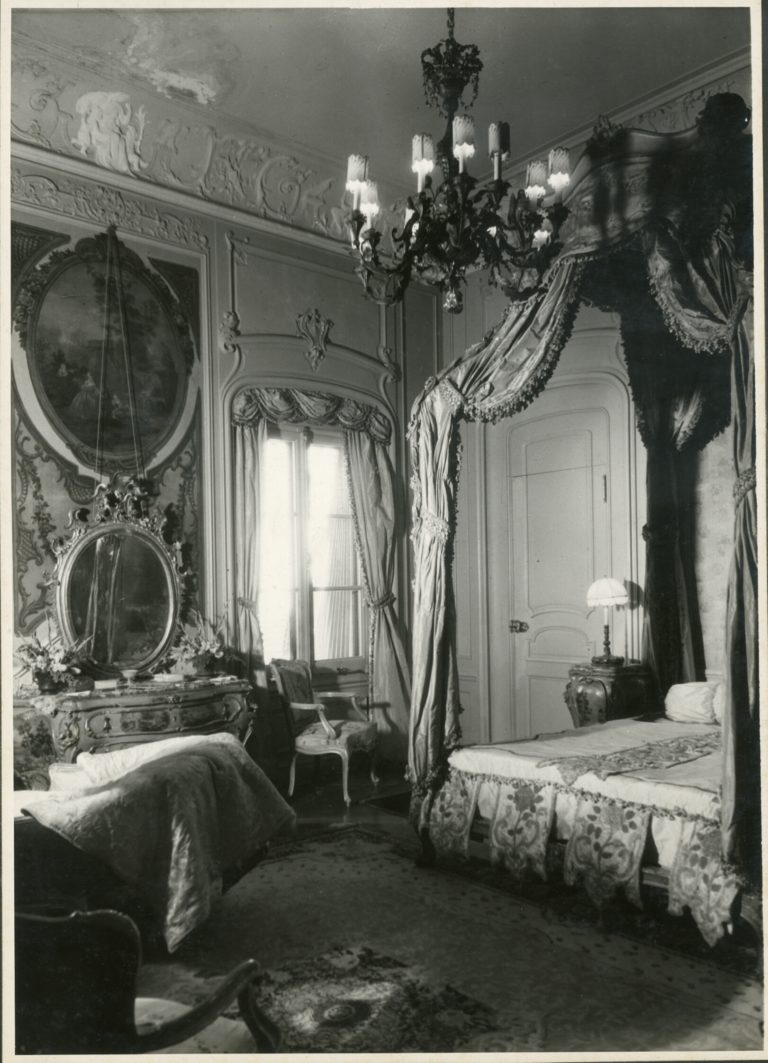
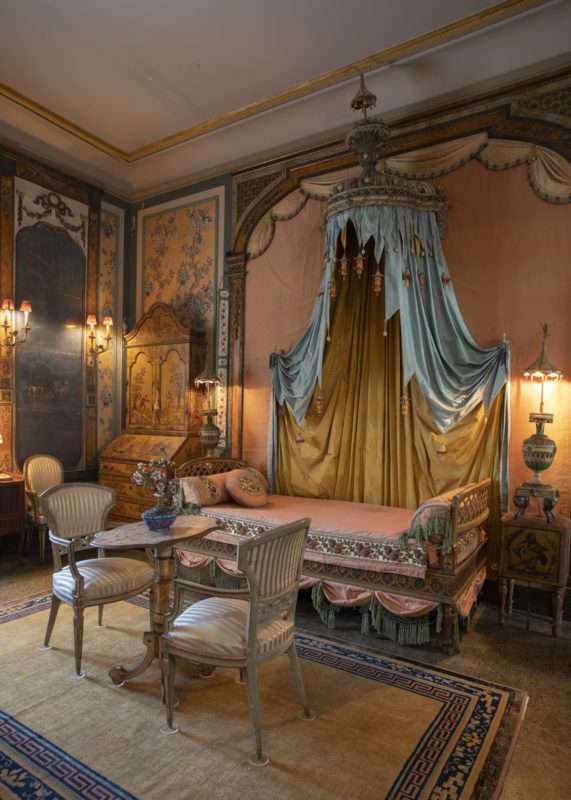
Ornate historical bedroom with a canopy bed, draped curtains, intricate woodwork, and decorated walls, featuring elaborate furnishings and a chair. Black and white photograph.
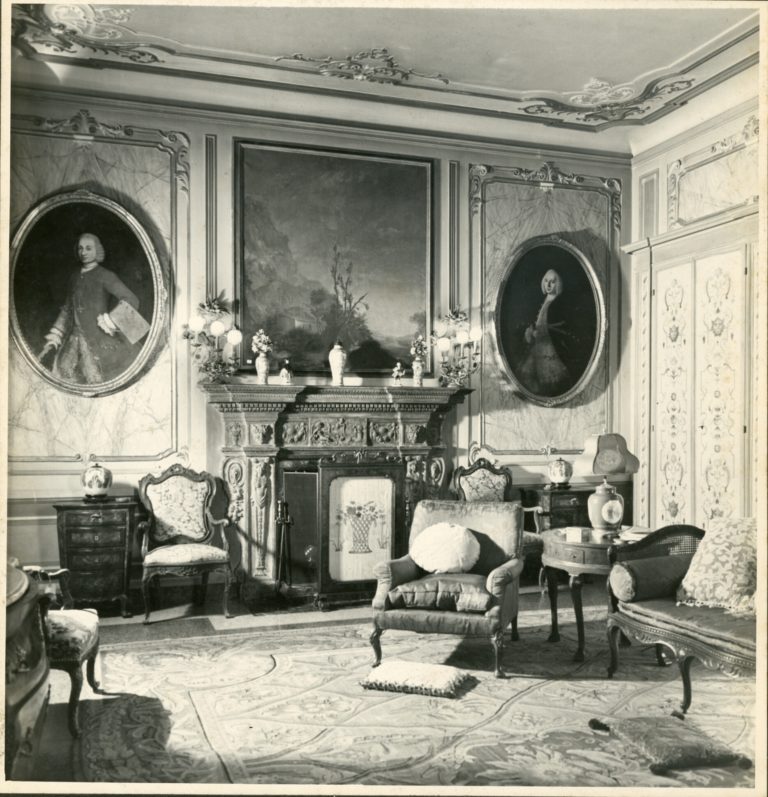
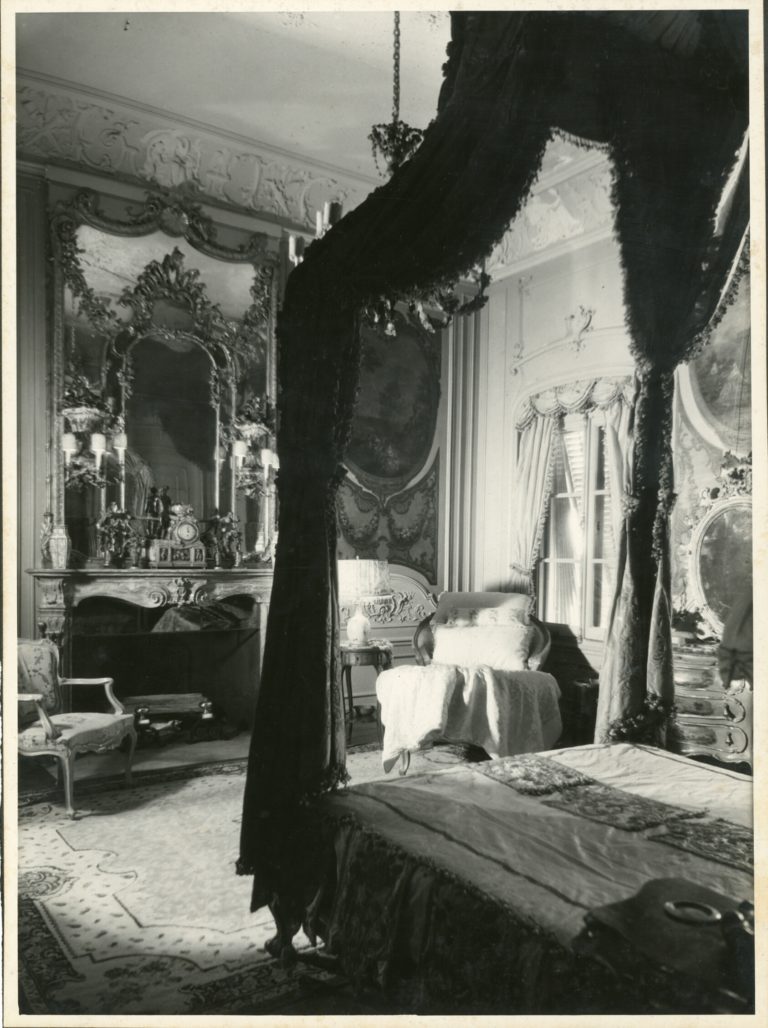
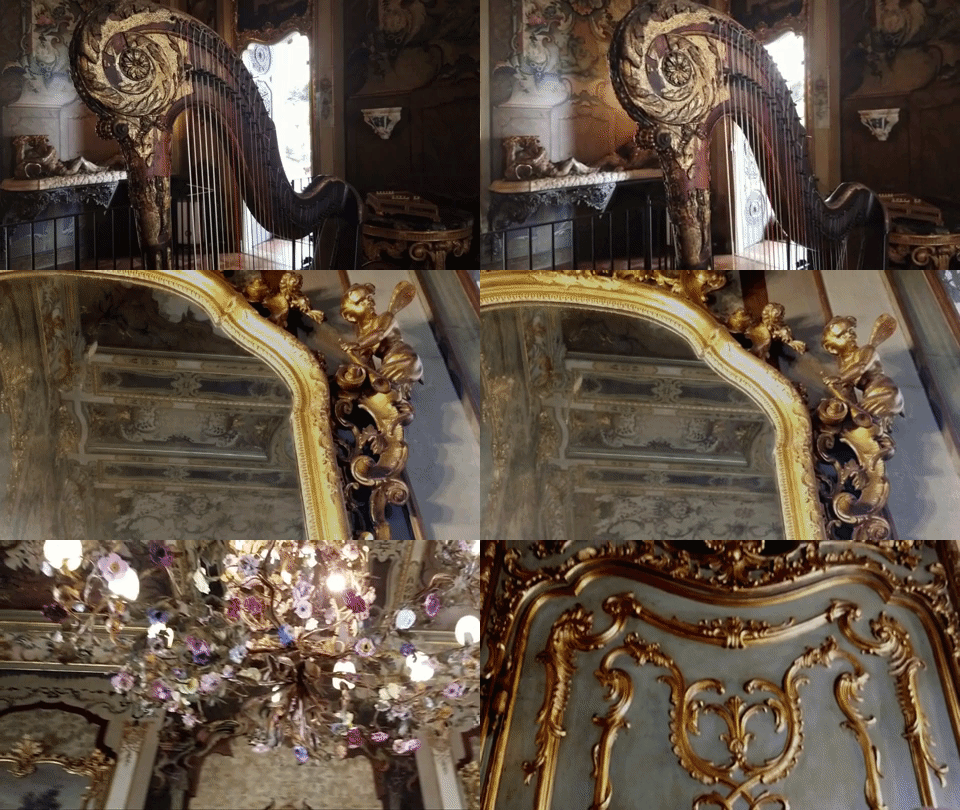
An ornate room with a fireplace and ornate furniture.
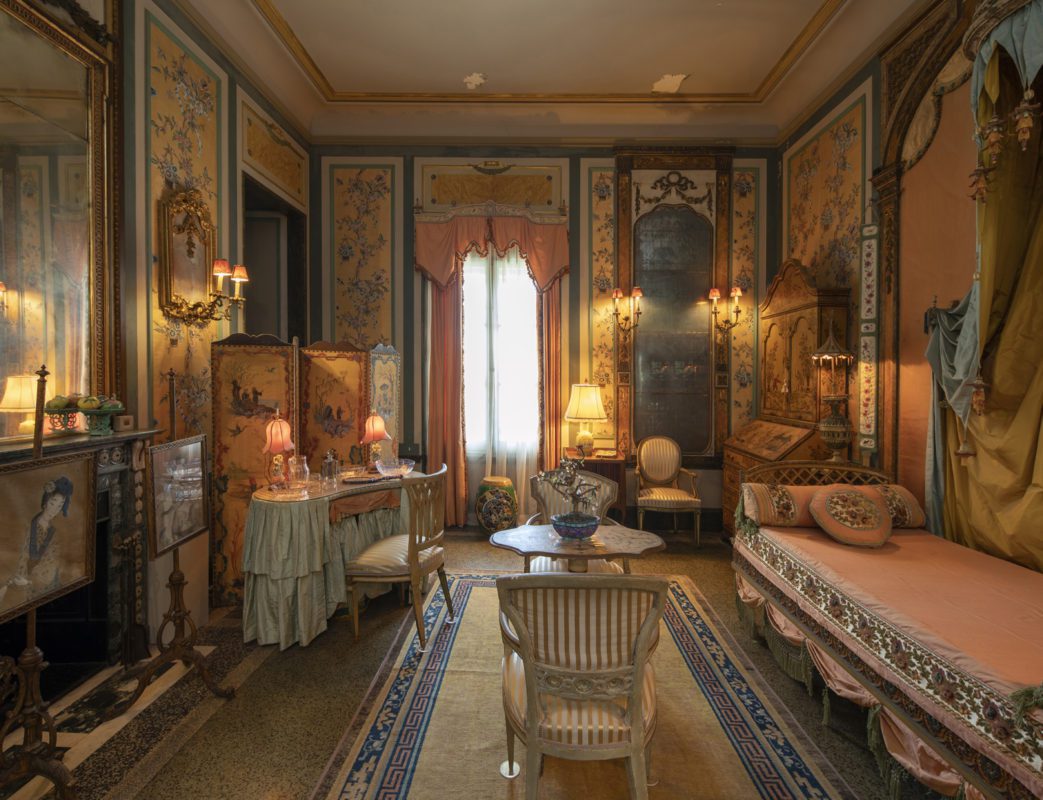
Ornate vintage bedroom with a canopy bed, antique furniture, and warm lighting. Striped chairs and a small table are in the foreground. Elegant decor and patterned rug complete the setting.
An ornate room with patterned walls, antique furniture, and a daybed. A chandelier hangs from the ceiling, and a large window is in the background, draped with curtains.

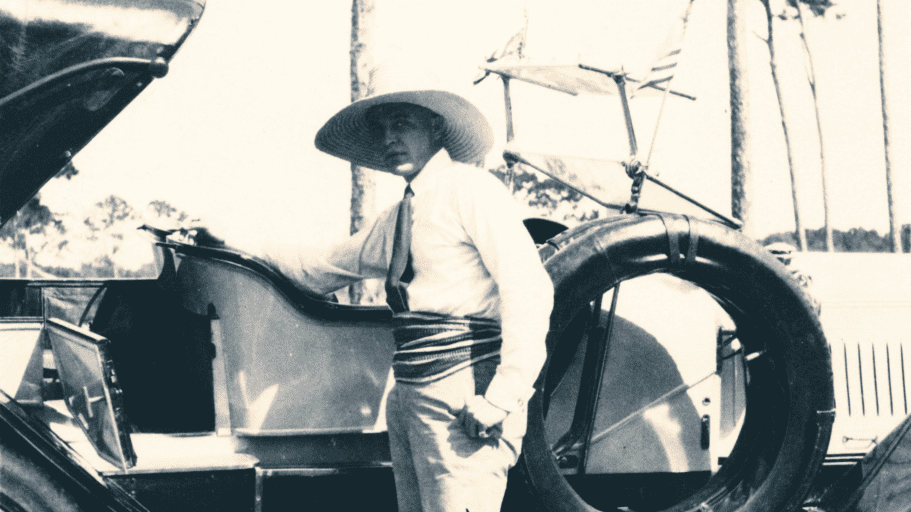
James Deering built Vizcaya as his winter home between 1914 and 1916, a time when America was emerging as an international economic and cultural force.

By adapting European design traditions to a Miami context, Deering showed that America could compete with Europe, not only financially, but also culturally. In 1910 Deering hired Paul Chalfin (1874–1959) to advise on the creation of Vizcaya. Chalfin was involved in all aspects of Vizcaya’s design and is considered the artistic mastermind behind its creation.

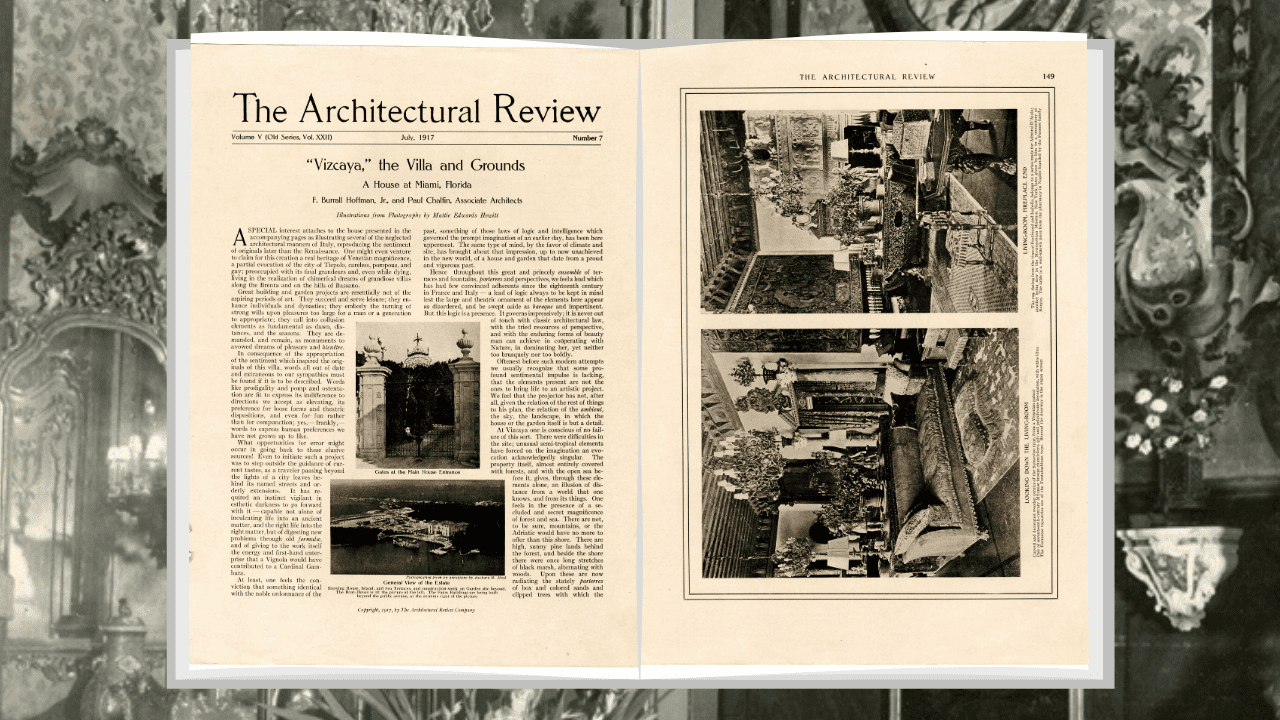
Deering and his designers followed a practice common for the wealthy of this era, by decorating rooms in historic styles.

Welcoming Guests to Vizcaya

Vizcaya has nine guest bedrooms and each one is designed differently. In that era, guests would stay on for weeks.

Chalfin insisted on giving all the guest bedrooms whimsical names. Some of the room names are inspired by people, others are inspired by design styles. The room names romanticize the estate though Deering appears to have been frustrated with the obscure names and wrote in a 1916 telegram,

“’Espagnolette, Pantaloon, Lady Hamilton, Goyesca and Manin’ I should never have chosen, and am sorry that we are not together to discuss the matter….I suppose it will always be possible in future to come to another decision….”

Let’s explore the many rooms in Vizcaya’s Main House, their names and design.

Belgioioso

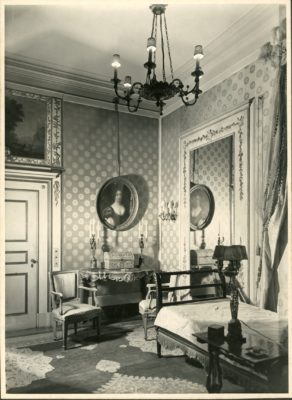
Paul Chalfin named this remote and lofty tower bedroom in honor of the Countess of Belgioioso, a prominent public figure in early 1800s Milan.

As Chalfin explained to his client, James Deering: “It is because this room is furnished in the manner prevalent during the period of her prestige that it has been called after her.”

Vintage room with ornate wallpaper, chandelier, framed portraits, a table with candlesticks, chairs, and draped curtains.

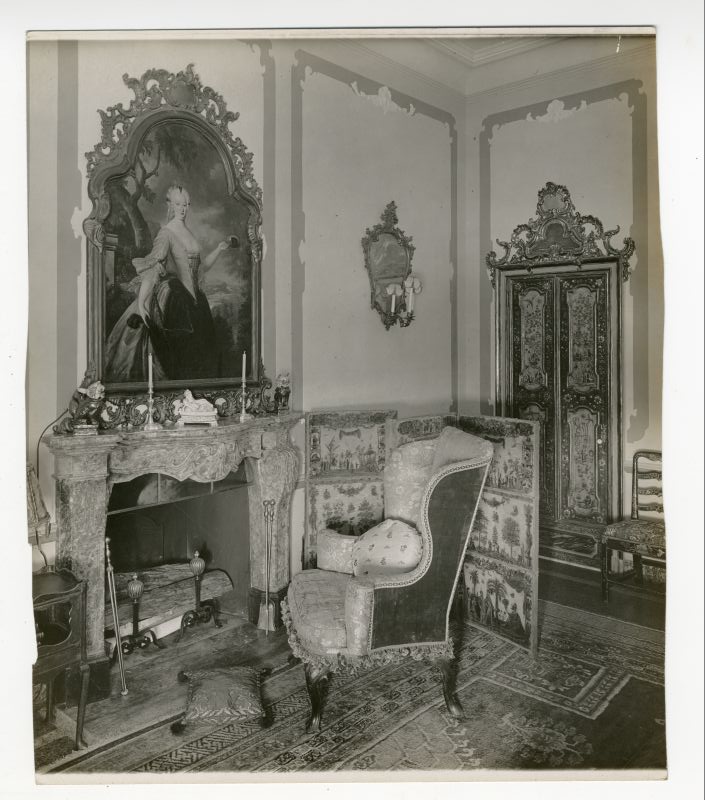
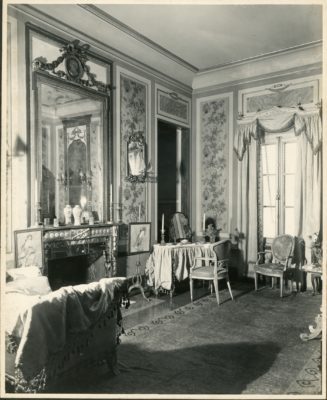
Chalfin designed this guest bedroom in a style known as “Chinoiserie.” While most of Vizcaya is about the adaptation of European traditions to an American context, Chinoiserie was based on the adaptation of Chinese art by Europeans. Chalfin called the room “Cathay” after the name given to China by the explorer Marco Polo.

A vintage room features ornate decor, a large mirror above a fireplace, patterned walls, a round table with a chair, and a window with curtains, creating an elegant and historical atmosphere.

These two rooms form a suite that offered Vizcaya’s most gracious guest accommodations with wide views of Biscayne Bay and the formal gardens.

The galleon and the caravel were types of ships used by Spain to explore the Americas. The caravel is an important symbol at Vizcaya and establishes a link between “Old World” Europe and “New World” Miami. The galleon, a larger and statelier ship, was used by Paul Chalfin for the lavish salon. Together, the rooms reference the myth favored by James Deering that Vizcaya was named after an explorer.

The name Espagnolette was chosen to recall a mode of Spanish dress. The style was popularized in France through the work of artist Jean-Antoine Watteau (1684–1721), whose fantasy garden paintings inspired the décor of this room.

“My bed was Lady Hamilton’s—one of the most beautiful I ever saw. I wish you could see the view from my window over the water. An enormous pavilion is being completed out …of stone, in the shape of a great ship.”

–Corinne Melchers, Guest of Deering, 1923.

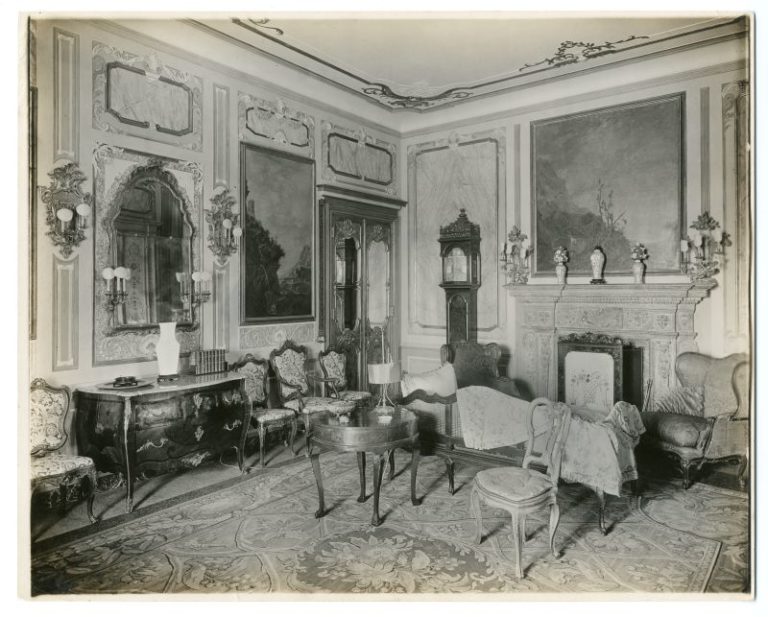
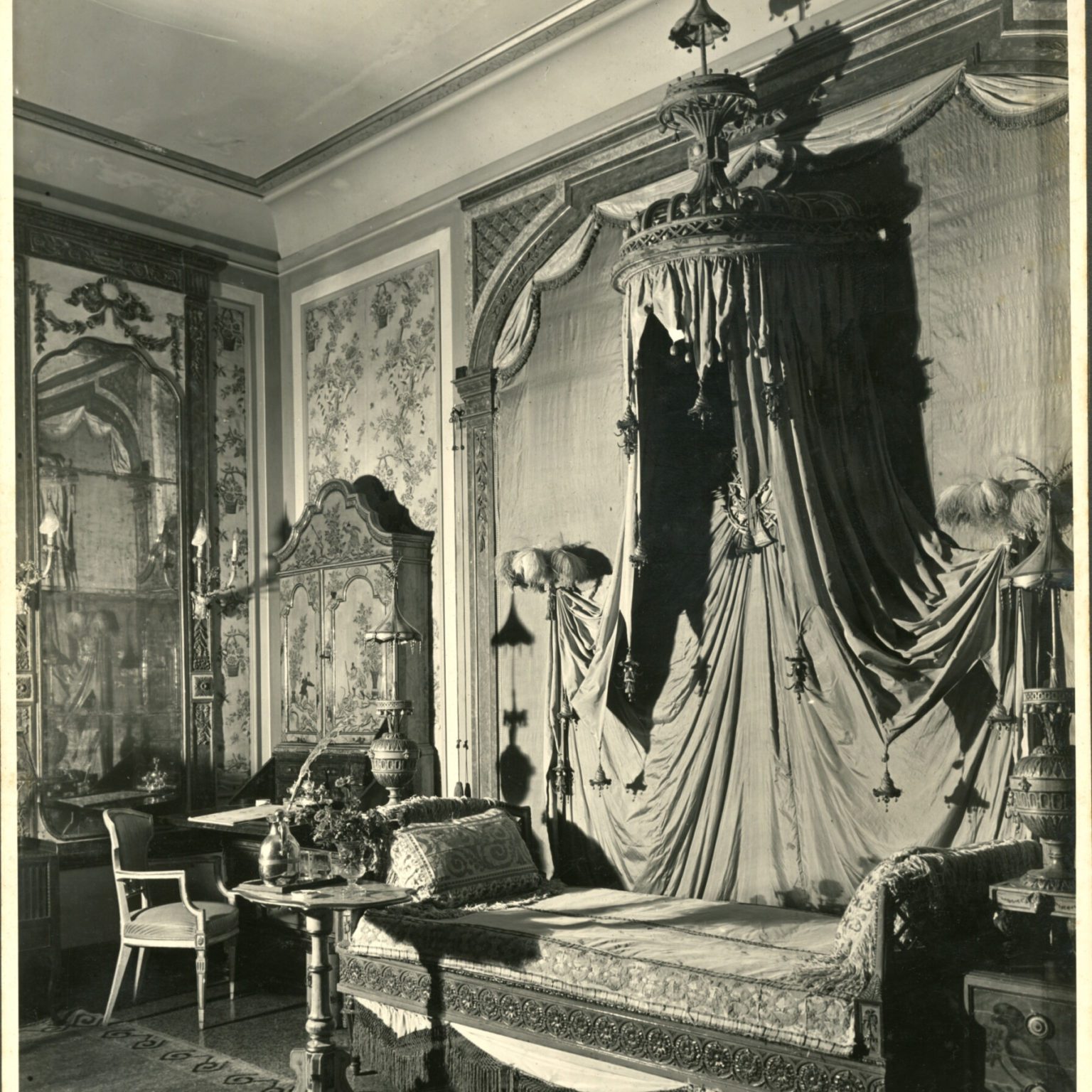
This bedroom with breathtaking views of Biscayne Bay was was named after Lady Emma Hamilton (1765–1815), an English woman married to the British ambassador to Naples. Paul Chalfin told James Deering that the bed was “said to have belonged to Lady Hamilton” and the objects scattered throughout the room “would have met with favor of this distinguished beauty.”

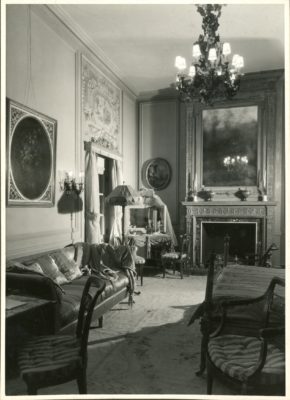
A vintage living room with ornate decor, including a chandelier, decorative fireplace, upholstered furniture, and framed artwork on the walls.

“The water reflects upwards to the ceiling and the sound of waves is audible in this room, precisely as upon the quay of this great canal of Venice.”

–Paul Chalfin, Vizcaya’s artistic director

This room evoked the Venetian island of Giudecca for Chalfin. Guests of this bedroom could gaze out the window at Venetian-style bridges and dream of the faraway city. One such occupant may have been head housekeeper, Ethel Syer; letters suggest she stayed here for about a month.

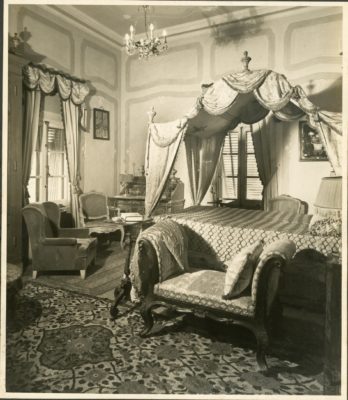
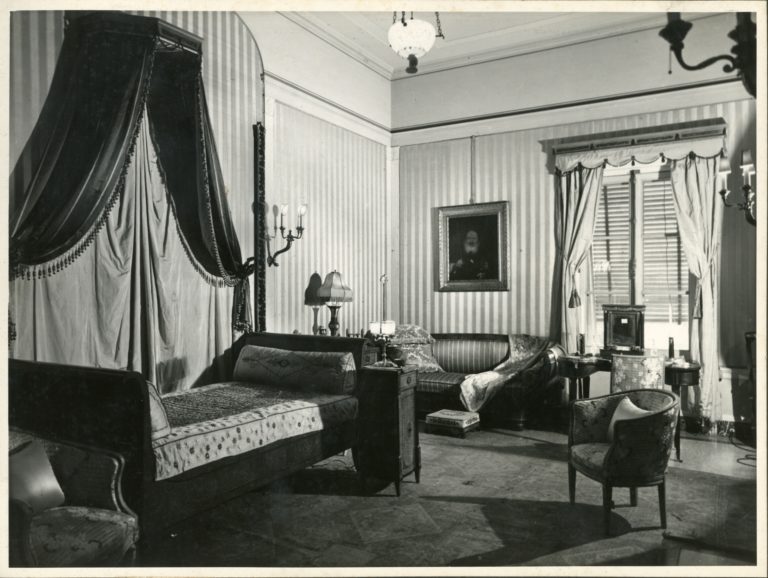
Vintage bedroom with a canopy bed, ornate chairs, and patterned rugs. A chandelier hangs from the ceiling, and light filters through shuttered windows.

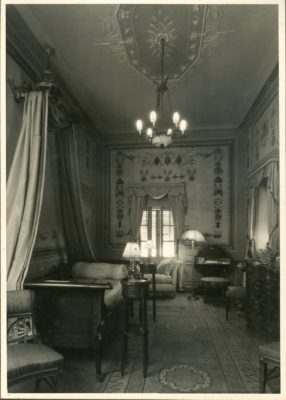
“The decorations of this room are said to have come from Spain and are such as the patronesses of Goya would have enjoyed.”

–Paul Chalfin, Vizcaya’s artistic director

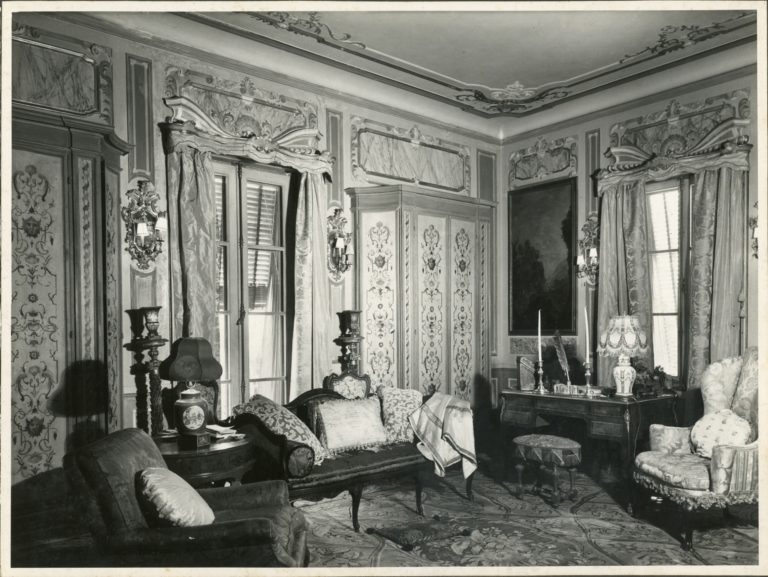
Goya (Francisco Jose de Goya y Lucientes, 1746-1828) was a romantic Spanish painter. Chalfin’s account of the room is fanciful, as the wall panels belong to the same set as those in the Enclosed Loggia downstairs and are actually Italian. This “mistake” reveals how patrons and designers of the time were often more interested in conjuring a mood than achieving accuracy.

Vintage black and white photo of an ornate bedroom with a canopy bed, decorative walls and ceiling, chandelier, curtains, and a small desk with a lamp.

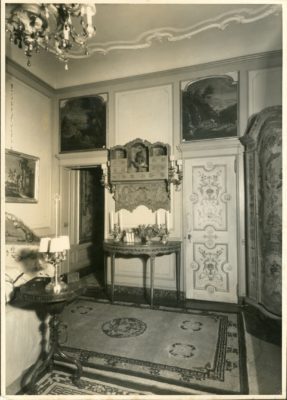
Chalfin named this room after a buffoonish character of Italian popular theater, the Venetian merchant Pantaloon. This reference demonstrates both Chalfin’s sense of humor as well as his admiration for Venice.

Vintage room with ornate furniture, a decorated door, paintings on the walls, and a chandelier. A small table with decorative items stands against the wall.

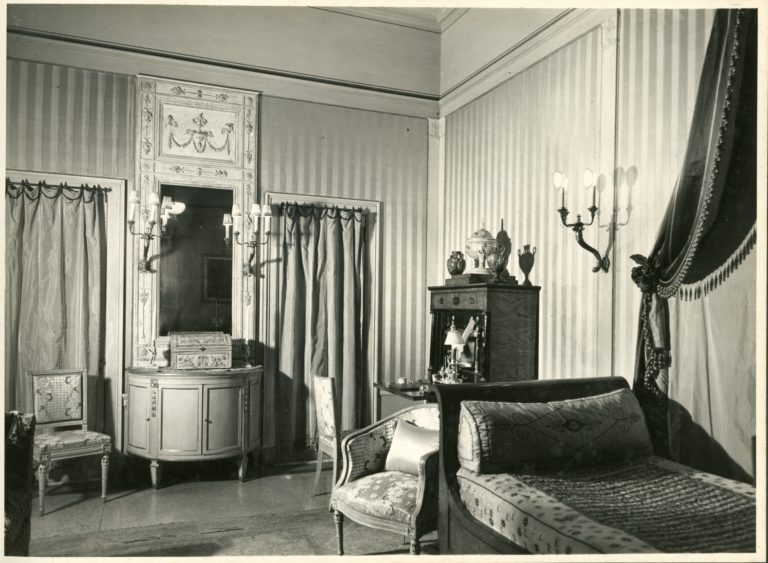
This spacious room honors the last leader, or “doge,” of Venice, Ludovico Manin, who ruled until 1797. It is furnished in a style of simplicity and functionality, known as “Biedermeier.”

COME EXPLORE OTHER BEAUTIFUL SPACES IN PERSON

CLICK BELOW TO START
PLANNING YOUR VISIT TODAY!
A large historic mansion with formal gardens is framed by red ribbon. Text reads: "Stories Worth Sharing. A Membership That Lasts a Year. A Legacy That Lasts Forever.

Last-Minute Gift? We’ve Got You.

Need something meaningful right now? Send a Vizcaya Gift Membership instantly—beautiful, memorable, and delivered straight to their inbox.

Give a year of wonder, history, and shared experiences at Miami’s most iconic estate… with zero stress.

Large estate with manicured gardens, a fountain, and Vizcaya Museum & Gardens logo; overlaid text promotes membership and legacy with blue ribbon accents.

Give the Gift of Vizcaya This Holiday Season

Share a year of beauty, history, and meaningful experiences. A Vizcaya Gift Membership creates stories worth sharing—and helps preserve a Miami treasure for future generations.

Instant digital delivery. Perfect for holiday gifting.

A group of four people, two adults and two children, stand together outdoors with a "20% OFF Membership" sign overhead.

One-Day-Only: Our Last Sale of the Year

Give yourself or someone you love a gift that lasts long after Cyber Monday ends.

Membership pays for itself in just a few visits and digital delivery makes it the perfect gift—beautiful, meaningful, and instant.

BEFORE YOU BOOK: Learn about preservation at work.

Close-up of rare orchids in a greenhouse setting with text promoting a behind-the-scenes tour at Vizcaya Museum and Gardens.

Visiting this Friday? Jump on this Exclusive Tour!

If you love orchids, you don’t miss this special behind-the-scenes tour on Friday, December 13, 11:30 a.m. Join Vizcaya’s own orchid specialist as we go inside the museum’s greenhouse to explore rare orchids and learn expert plant care tips.

Tickets are just $39 per person and include museum admission. Spots are limited, so reserve yours now!